
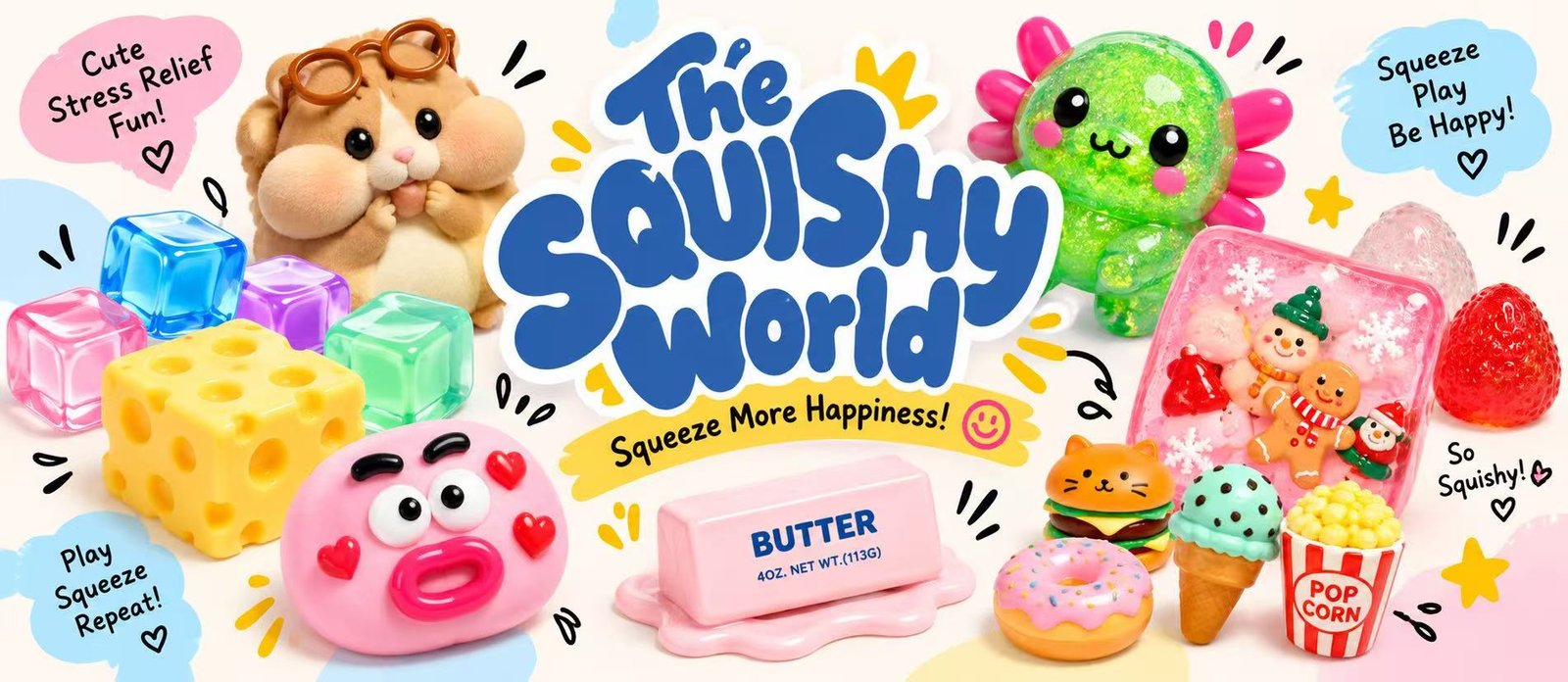
Picking a squishy toy sounds simple until you are staring at a shelf of cubes, dumplings, and animal shapes that all promise the same thing: stress relief. The material, the squeeze style, and even the shape change how satisfying a toy feels in your hand, and getting that match wrong is the most common reason a squishy toy ends up forgotten in a drawer.
Key Takeaways
– The global fidget toy market reached $9.57 billion in 2026 and is projected to grow at a 7.96% CAGR through 2034 (Fortune Business Insights, Fidget Toy Market Report, 2026).
– Soft, slow-rebound foam suits anxious or repetitive squeezing, while firmer TPR and silicone suit quick stress release.
– Kids under 8 do best with larger, simple shapes; teens and adults often prefer smaller, detailed designs.
– Seasonal and surprise formats, like mystery boxes, add a collecting angle that keeps a squishy toy in regular use.
Why Are Squishy Toys So Popular Right Now?
In 2026, Fortune Business Insights valued the global fidget toy market at $9.57 billion, up from smaller estimates just a few years earlier, and projected it to reach $17.65 billion by 2034 (Fortune Business Insights, Fidget Toy Market Report, 2026, retrieved 2026-11-02). That growth is not only about kids’ toys. Adults buy squishies for desks, cars, and travel bags as a portable way to release tension between tasks.
The appeal is sensory, not just visual. A toy that squishes slowly and returns to shape gives repeated, predictable feedback. That predictability is part of what makes fidgeting feel calming rather than distracting.
What Does the Research Say About Fidgeting and Stress?
A 2026 study published on PubMed found that participants using a fidget device showed improved heart rate variability and lower self-reported anxiety under stress compared to a control group (PubMed, Impact of Fidget Devices on Anxiety and Physiological Responses, 2026, retrieved 2026-11-02). Heart rate variability is a marker of how well the body recovers between stress responses, so a higher reading is generally a good sign.
This does not mean a squishy toy replaces therapy or medical care for anxiety. It means a simple repetitive squeeze can measurably calm the nervous system in the moment, which is exactly the kind of quick reset people reach for during a stressful meeting, a long commute, or a study session.
What is less discussed is why shape matters as much as material. A toy shaped like food or a recognizable animal adds a layer of playful distraction on top of the physical squeeze, which is likely why novelty-shaped squishies outsell plain stress balls in most toy aisles today.
Which Material Should You Choose: Foam, TPR, or Silicone?
Slow-rebound foam gives the softest, most forgiving squeeze and suits people who fidget often throughout the day, since it resists wearing out under repeated pressure. TPR (thermoplastic rubber) and silicone squishies spring back faster and feel firmer, which some people find more satisfying for a quick, sharp stress release.
| Material | Feel | Best For |
|---|---|---|
| Slow-rebound foam | Soft, slow return | Frequent, repetitive squeezing |
| TPR | Firm, fast bounce-back | Quick stress release, travel use |
| Silicone | Smooth, cool to the touch | Sensory variety, desk display |
If you are buying your first squishy, a TPR or silicone piece is usually the easiest starting point. It holds its shape well over time and is simple to clean, which matters for a toy that gets handled every day.
A Closer Look: Food-Shaped vs. Animal-Shaped Squishies
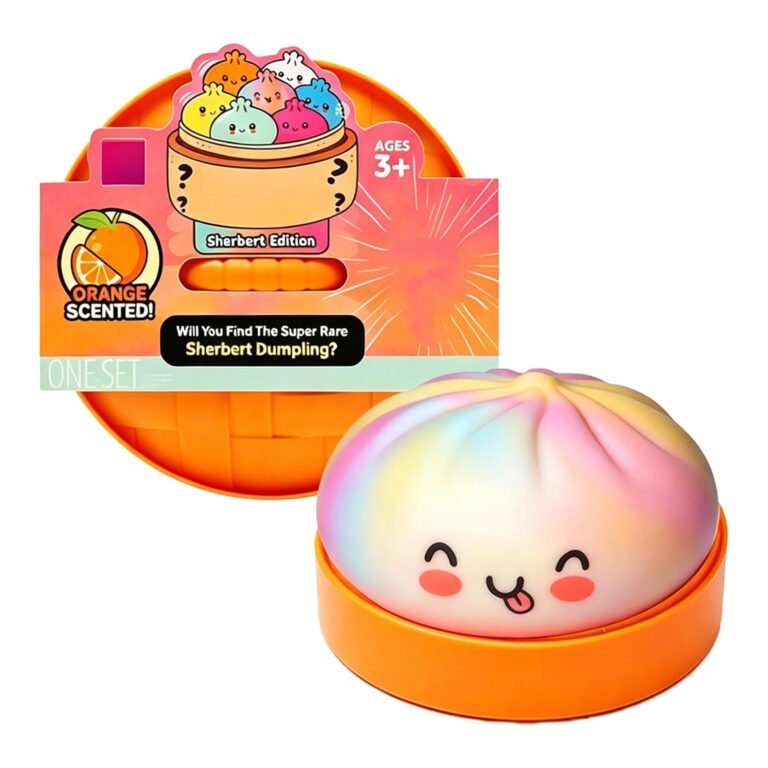
Food-shaped designs, like a dumpling or a pizza slice, tend to feel more novel and collectible, which works well as small gifts. Animal shapes, like an axolotl or a cat paw, often come in larger sizes that are easier for younger children to grip securely.
How Do You Choose a Squishy Toy by Age Group?
Children under 8 do best with larger squishies that are easy to grip and free of small detachable parts, since smaller pieces raise a choking risk for very young kids. Teens and adults generally have no size restriction and often prefer smaller, more detailed designs that fit in a pocket or pencil case.
- Ages 3-7: Large, single-piece shapes with no small add-ons.
- Ages 8-12: Mid-size shapes, mystery boxes, and simple color-change designs.
- Teens and adults: Compact shapes, sensory cubes, and detailed novelty designs for desks or bags.
Always check the product packaging for age guidance and any specific care instructions before giving a squishy toy to a young child.
Are Mystery Boxes and Countdown Sets Worth It?
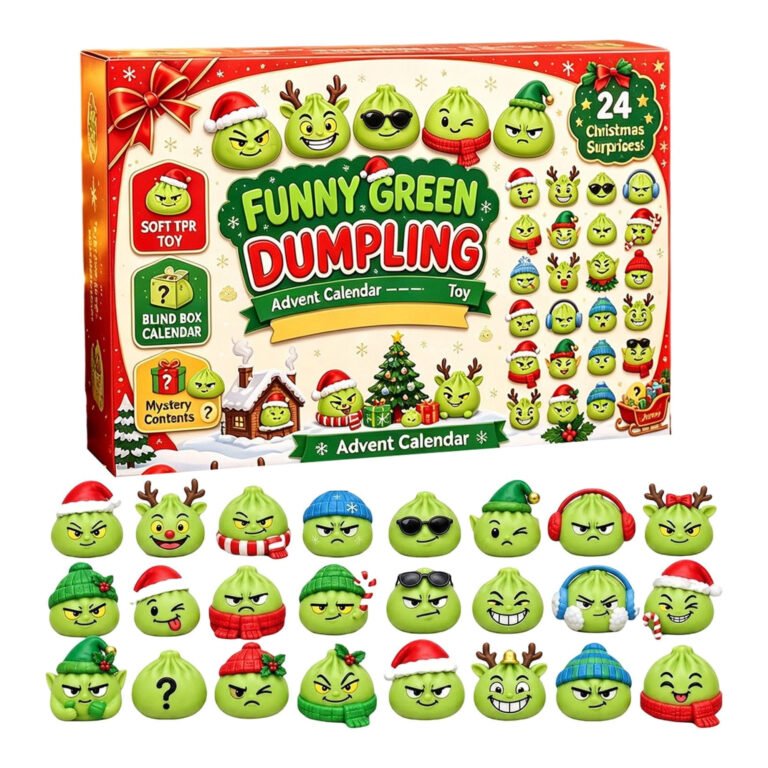
Mystery boxes and countdown-style squishy sets add a surprise element that keeps interest high over days or weeks instead of a single unboxing moment. In 2026, Fortune Business Insights’ market report noted that novelty and seasonal formats are among the fastest-growing segments within the broader fidget toy category (Fortune Business Insights, Fidget Toy Market Report, 2026, retrieved 2026-11-02).
These formats work especially well for holidays, when a themed countdown box becomes part of the celebration itself rather than a single gift.
Ready to find your own squishy? Browse the full AquaSquishy collection by shape, material, and color.
Shop All Squishy ToysHow Do You Care for a Squishy Toy So It Lasts?
Most squishy toys are not food and should never go in the mouth, even when they are scented or shaped like food. Keep them away from sharp objects, extreme heat, and prolonged direct sunlight, which can cause foam and TPR to degrade faster.
A gentle wipe with a slightly damp cloth is usually enough to clean most squishy toys. Always follow the specific care notes printed on the product packaging, since formulas vary between brands.
Frequently Asked Questions
Is a squishy toy the same as a stress ball?
Not exactly. A 2026 PubMed study measured fidget devices broadly, including stress balls and squishies, and found both can improve physiological stress markers (PubMed, 2026). Squishy toys typically add novelty shapes and slower rebound, while classic stress balls focus on a single firm squeeze.
What age is appropriate for squishy toys?
Larger, single-piece squishy toys are generally fine from around age 3, while sets with small parts or mystery compartments suit ages 8 and up. In 2026, most manufacturers print specific age guidance directly on product packaging, which should always take priority.
Do squishy toys really help with anxiety?
In 2026, a PubMed-published study found measurably lower anxiety and improved heart rate variability in participants using a fidget device under stress (PubMed, Impact of Fidget Devices on Anxiety, 2026). They are a supplementary coping tool, not a replacement for professional support.
How long do squishy toys typically last?
With normal use and proper care away from heat and sharp objects, most TPR and silicone squishies hold their shape for many months of regular squeezing. Slow-rebound foam types may compress permanently sooner if squeezed very frequently every day.
Are scented squishy toys safe?
Scented squishy toys are designed to be smelled, not eaten, even when the scent matches a food flavor. Always supervise young children with scented toys and follow the safety notes on the packaging.
Choosing the Right Squishy Toy, One Squeeze at a Time
The right squishy toy comes down to three decisions: material for feel, shape for personality, and size for the person using it. Start with one piece that matches how you plan to use it, whether that is a desk companion or a gift, and build a small collection from there once you know what you reach for most.
Related Guides
Halloween Squishy Toys: The 2026 Gift Guide for Countdown Boxes
Squishy Advent Calendars: How to Pick a Christmas Countdown for 2026
1. Fortune Business Insights — “Fidget Toy Market, 2026-2034”, retrieved 2026-11-02, https://www.fortunebusinessinsights.com/fidget-toy-market-110591
2. PubMed — “Impact of Fidget Devices on Anxiety and Physiological Responses in Stress”, retrieved 2026-11-02, https://pubmed.ncbi.nlm.nih.gov/39946958/